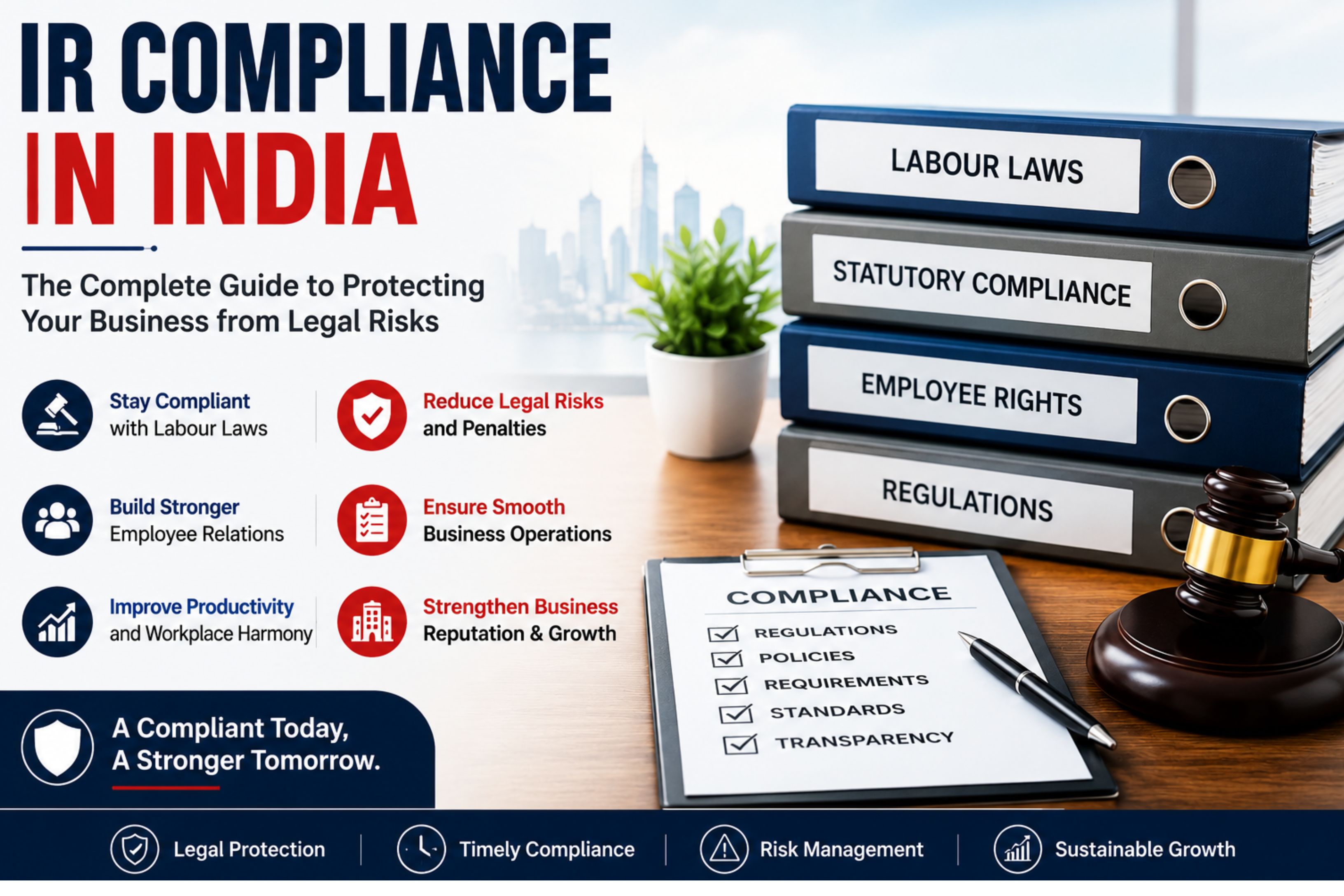
Industrial Relations (IR) Compliance: More Than Just Legal Formality.
Many businesses think IR Compliance is only about maintaining registers or submitting government forms. In reality, it is much more than that. Strong Industrial Relations compliance protects your business from legal disputes, improves employee trust, and creates a stable work environment.
Whether you operate a manufacturing plant, warehouse, logistics company, construction site, or corporate office, compliance with labour laws is no longer optional. It is a business necessity.
What is IR Compliance?
Industrial Relations (IR) Compliance refers to following all applicable labour laws, employment regulations, and statutory requirements that govern the relationship between employers and employees.
It includes maintaining proper records, obtaining required registrations, filing statutory returns on time, complying with wage-related regulations and ensuring employee welfare according to government norms.
A compliant organization not only avoids legal risks but also builds credibility with employees, clients, and regulatory authorities.
Why IR Compliance Matters
Ignoring compliance may seem harmless initially, but even small mistakes can lead to significant financial and operational consequences.
Some common risks include:
On the other hand, businesses that prioritize compliance enjoy smoother operations, better workforce management and increased confidence from customers and investors.
Key Areas of IR Compliance
Every organization should regularly review the following compliance areas:
The exact requirements vary depending on the industry, workforce size and state regulations.
Common Compliance Mistakes Businesses Make
During compliance reviews, these issues are frequently observed:
Most of these issues can be avoided through regular compliance monitoring and timely professional guidance.
Benefits of Maintaining Strong IR Compliance
An effective compliance system offers long-term business advantagesReduced Legal Risk
Maintaining compliance does not have to be complicated. A few proactive practices make a significant difference:
Consistency is the key to successful compliance management.
IR Compliance is not simply about avoiding penalties—it is about building a responsible, transparent, and well-managed organization. Businesses that invest in compliance today are better prepared for audits, regulatory changes, and long-term growth.
As labour laws continue to evolve, organizations should view compliance as a strategic investment rather than an administrative burden. A strong compliance framework protects both the business and its employees, creating a workplace built on trust, accountability, and sustainable success.
If your organization needs support with Labour Law Compliance, HR Documentation, Payroll, PF & ESIC, Environmental Compliance, or Manpower Solutions, Apex Solution is here to help.
Contact Apex Solution TodaySubscribe for labour law updates, recruitment insights, HR best practices, and compliance alerts.